patching...
Welcome back, Patch Blogger!

Honolulu Avenue Will Have a Road Diet Test

Glendale City Council approved a road diet test case program to run along Honolulu Avenue, from Las Palmas Avenue to Ramsdell Avenue.
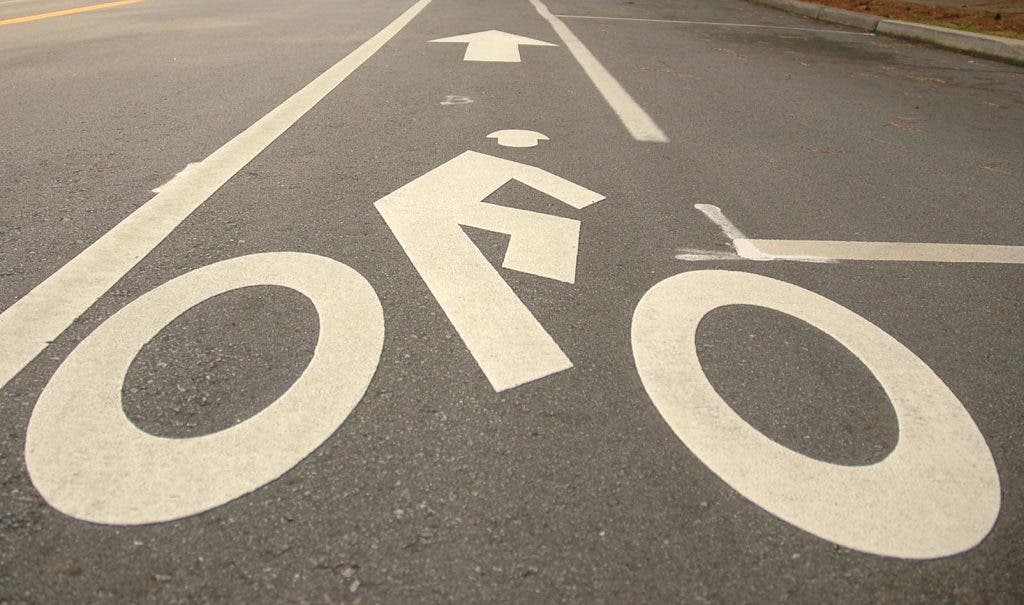
 

It's time to tune your bicycle and dust off your helmet: Montrose and La Crescenta will have a test road diet running along Honolulu Avenue following Glendale City Council's approval of the plan Wednesday. 

The route starts at one end of Montrose Shopping Park at Las Palmas Avenue and moves west to Ramsdell Avenue, Erik Yesayan of Walk Bike Glendale told Patch. The plan could extend further west depending on city funding and varied from the original seven options that were presented, he said. 

City council members and locals discussed the benefits and drawbacks of a road diet test and overwhelmingly passed the test case, with only council member Dave Weaver opposing the road diet.

The road diet case was discussion since a Glendale City Council meeting last December. Since then, Glendale’s Public Works Department has worked to research the potential benefits pedestrians and bikers could receive from a road diet. After a recent meeting, Glendale’s Public Works Department decided to add a seventh option to the six original streets in consideration for the test case program. The road diet would be implemented over a year along with extensive community outreach.

Jano Baghdanian, the Traffic and Transport Administrator of Glendale, was the first to address the issue and detailed the recommended options for the test case program. Baghdanian explained that the estimated cost of the road diet ranged from $35,000 to $125,000 and would be allocated from Transportation Development Act funds.

Many people who asked to speak were members or supporters of the pedestrian, biking community. 

“Our café has become somewhat of stopover for a lot of the cyclists, especially in the morning during rush hour and we want to help out,” said Daniel Richardson, who represented Leon Café and Bakery. “We do want to support our patrons and the community by providing safe access to the roads for all local transportation in Glendale.”

Ryan Burg, a Montrose resident, mentioned his support of the road diet and pointed out that a successful test case was the Montrose Shopping Park that originally had four lanes and now has two.

“It’s a very popular to go shop and have dinner [in Montrose],” remarked Burg, who bikes to work and for recreation. “It’d be great if what’s in Montrose Shopping Park continues and it’s not the exact configuration that’s there, but I’d really support it.”

Those who disliked the road diet argued that the test case program would increase traffic congestion and that it was a questionable use of public funds.

“I, myself, think it’s ridiculous. You’re not taking into account the inconvenience to people,” commented Glendale resident Margaret Hammond. “Has the Homeowners Association been notified? I don’t think so, I don’t think people would approve.”

Glendale City Council voted to have the road diet to increase safety, to promote healthy living, to support a bike master plan set out by the County of Los Angeles, and to provide an alternative form of transportation.

Mayor Laura Friedman proposed the Public Works Department look into the Honolulu Avenue option that goes from Ramsdale Avenue to Pennsylvania Avenue, creating a two-foot wide buffer between motorists and bicyclists as well as a five-foot wide bicycle lane. 

People at the council meeting represented all of the Glendale community, not just bikers, but also business owners came out to support it, Yesayan said. 

"We were just really excited, it’s going to set a good example," Yesayan said.

Yesayan and other members of Walk Bike Glendale, a Los Angeles County Bicycle Coalition and Glendale advocacy group, hope this will set examples for other streets. Officials will see if more biking happens, or if it increases congestion. This Montrose road diet could lead to more road diets in Glendale, he said. 

"It’s a good first road diet test and street to test the road diet on because it’s used by a lot of people," Yesayan said. "I think it’s a good street to see the real benefits of it, because it’s mostly flat. I think a lot of people are going to be excited about using it."

Related Topics: Glendale City Council, Leon Cafe and Bakery, Los Angeles County Bicycle Coalition, Montrose Shopping Park, Walk Bike Glendale, and road diet
What is your reaction to the road diet test along Honolulu Avenue? Are you going to ride your bicycle on it? Tell us in the comments.

George L.

11:49 am on Wednesday, February 1, 2012

One very important point that needs to be stressed is that the funds are coming from the "Transportation Development Act" in which $'s have to be spent on alternative modes of transportation, ie biking and walking. These aren't city funds and cannot be spent elsewhere.

Also, the streets that were chosen are low volume streets. Imagine a road diet on Oceanview between Montrose and Verdugo, a street that see's twice the traffic of the Honolulu section that was approved. Streets in central Glendale are half the size and see 50-100% more traffic than this street and they do just fine.

Ultimately this is good for everyone, hence the test case. So everyone see's the benefit.

Take a joy ride down Riverside Dr between Victory and Buena Vista in Burbank. Great example of a multi-use road diet. Aside from all the lights, its a great, beautiful multi-functional street that handles cars, bikes, walkers AND horses.

Reply

John MacDougall

8:26 pm on Wednesday, February 1, 2012

As I understand what they are saying, the real intent is not so much to help cyclists, but to slow down traffic by constricting it to one lane, thereby forcing people to drive slower because of the congestion. The Bike lane seems like merely a means to that end, not the actual purpose. If the "diet" promotes cycling, that looks like a side effect. As a cyclist, who bike commuted for years, this particular experiment would be low on the priority list of things that would make my cycling safer or more convenient. It's a nice wide street with low volume to start with, and fairly flat so I can ride at almost the speed of cars. Bike lanes are more important on streets that are narrow where there's no good place to ride. As a resident on Honolulu, I'm less than thrilled by it causing more congestion on my street. Have they considered asking cycling clubs what they actually want? Real cyclists tend not to see bike lanes as that important. Going up Hospital Hill on Verdugo to La Canada going east, the bike lane is fine. Coming down that same hill going west, the bike lane is irrelevant because I'm going as fast as the cars and don't dare get forced over toward the curb where the bike lane is, but where there are road hazards and people pulling out of driveways and side streets. Riding on a wide flat street like Honolulu, riding is fine without a bike lane.

Reply

John MacDougall

8:30 pm on Wednesday, February 1, 2012

Actually, riding through Montrose Shopping Park is a real nuisance and a hazard because there are stop signs seemingly every 50 feet forcing constant stopping and starting; the road constricts so bikes are forced into the gutter at the throats of the restrictions, the signal push buttons require contortions to get over to the button if there isn't a car there to actuate the signal, and the angle parking puts the cyclists right behind cars backing up, and the traffic is congested so there is always a car right next to you. I tend to ride down on Sycamore or up on Montrose to avoid the shopping park. Is that really someone's idea of a bike friendly area? I ride up Angeles Crest Highway on Saturday mornings and hardest part of the ride is getting home through Montrose Shopping Park.

Reply

John MacDougall

9:23 am on Thursday, February 2, 2012

So, they presented seven (7) alternatives for public comment, and then ended up adopting an eighth alternative that had not previously even been listed or discussed? Doesn't that seem like the wrong way to about it? Shouldn't they get comment on the actual proposal before they adopt it?

Reply

Tomer Gurantz

9:16 am on Friday, February 3, 2012

The Honolulu road diet is for that section West of the shopping area, which doesn't see the volume of traffic that requires that wide a street. I've lived at the end of streets in San Francisco that went on road diets... they don't get MORE congestion... in fact, people end up driving down other, bigger arterial streets so they actually maintain and reduce congestion levels, and become A LOT more pleasant to walk or ride down, and even to DRIVE down! Also, the point isn't to convince cyclists who ride anyways to take the street (I am similar to you John, daily cyclist commuter and recreational, and I'll ride any and everywhere if I need to). It's to convince people who usually DO NOT ride that they have some safe resource to use. Besides the point of this is not to solve the lack of bike network problem in Glendale... it's to show that a road diet can be done without breaking the system, so that way we can start pushing more such projects out. I've seen much worse streets go on road diets to excellent results, so I'm looking forward to this immensely. I really hope they carry this through on Verdugo, between GCC and where it meets Canada in Montrose, as well... I can't think of another street that more deserves this.

Reply
Comment_arrow

George L.

9:22 am on Friday, February 3, 2012

Tomer, great insight, especially with your perspective from SF. A VERY congested city to say the least.

I totally agree on Verdugo between GCC and Canada. They put lines down to delineate the shoulder from the lane and that has worked ok but in certain turns they put dots down in the turn and its usually where a LOT of cars like to park. So as a cyclist, you have two choices inside the dots or outside. If the inside is taken by a car, you are SOL and outside the dots on a blind curve and in and amongst traffic. No margin for safety. I think Verdugo is prime for a road diet, at least a conservative one!

John MacDougall

10:49 am on Friday, February 3, 2012

I absolutely agree about Verdugo, which was my main point: That on a prioritization basis, there are lots of other roads that I would rank much more urgent for this sort of conversion than Honolulu. Going down La Crescenta by the debris basin and golf course there is already a bike lane on the downhill side, but it has storm drain grates and various road hazards in it that to me would be a first priority to correct - making the existing bike lane safe. The second priority would be uphill grades like Verdugo, Canada, and La Crescenta. A flat street like Honolulu to me is a low priority and there are lots of other issues with it. I live on it, and it is in fact a major thoroughfare. It IS a major arterial boulevard. It is not a quiet residential side street. If traffic is forced off it, I don't know where it will go instead and would just move the problem to someone else's street. Making Honolulu into that quiet pastoral pathway might actually increase my property's value and make it more pleasant to live on, but whether it is overall in the best interests of the community to make that conversion is something that needs more discussion than inserting it at the last minute over the other options that had been presented.

Reply

Leave a comment